
WINNER OF OUR AUDIENCE VOTE!:
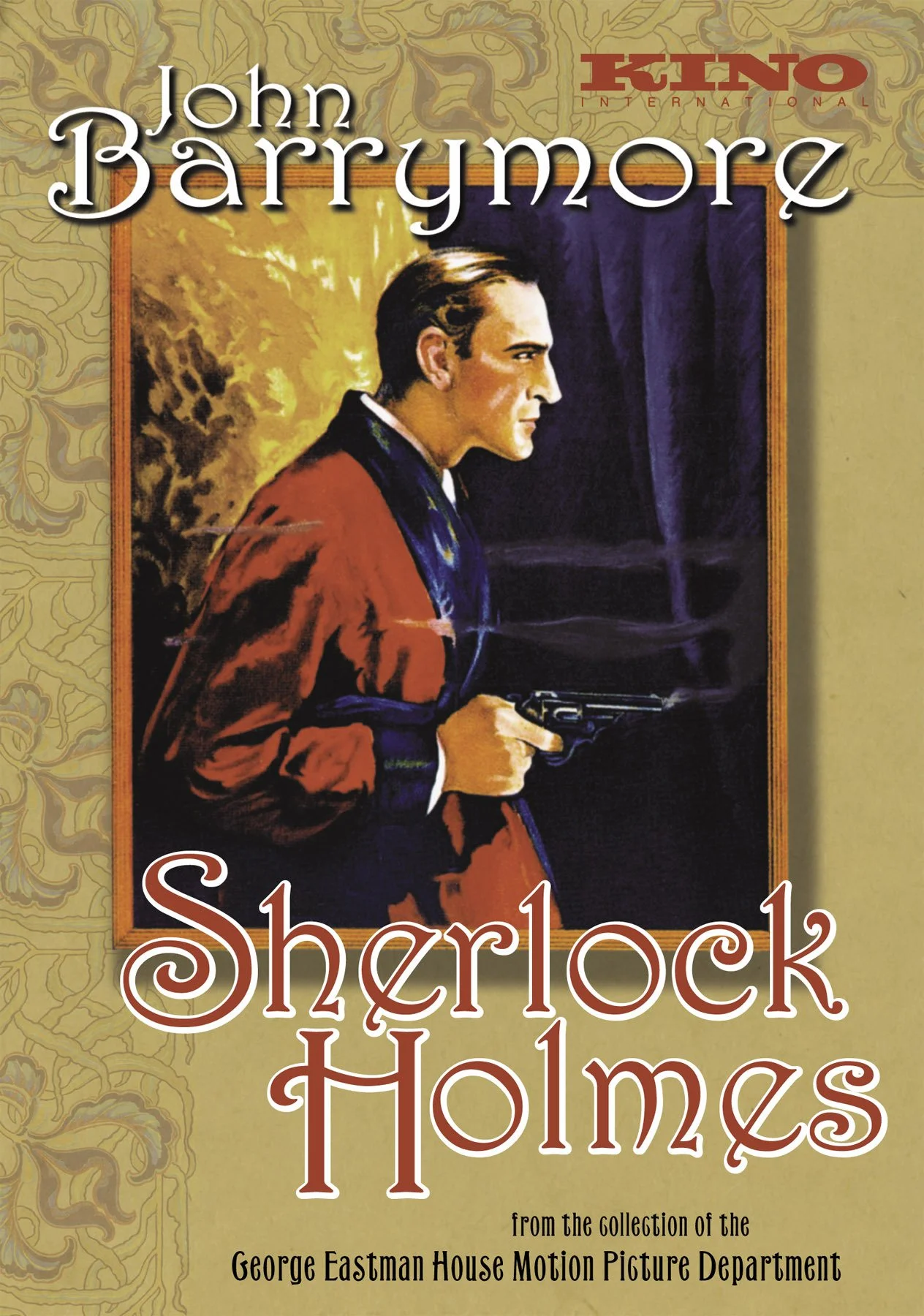
Sherlock Holmes (dir. Albert Parker, 1922; 2 hours 17 minutes), starring John Barrymore.
By 1922 John Barrymore was an established star on both sides of the Atlantic, and director Albert Parker was determined to have him play his Sherlock. The realities however were to prove somewhat difficult. Upon the director’s arrival in England, he discovered that “Barrymore couldn’t be seen or found anywhere. I finally tracked him down to a tiny little attic room at the Ritz Hotel and I went in and there was Barrymore sitting up in bed blind drunk. The room was in a terrible state …. Eventually I got him to work, and I can tell you I had a pretty rough time with him on location in England. We had rows; it was a very tricky time. We went to Switzerland; more rows …. Barrymore was drunk most of the time.” It didn’t inhibit his performance, however, or his creation of a famously romantic Sherlock. Again, supposed lost for decades, the film was rediscovered in 1975, its reconstruction produced by Kevin Brownlow and William K. Everson (aided in the early stages by director Albert Parker himself, then in his late 80s), with a second reconstruction (incorporating newly found elements) undertaken by the George Eastman Museum in 2001.
📽️ Doors open 5.30, for drinks, nibbles & classic cocktails.
📽️ Films start 6.30 with a brief introduction from the curators.
📽️ Entry is free with a yearly ticket, although we suggest a small donation of £5 per person to help keep the lights on. Yearly tickets can be purchased on the door (£7.50 adult / £6.00 concessions).
📽️ If you buy tickets and are subsequently unable to attend, please let us know as soon as possible so that we can give your seat(s) to someone else.